
ABC #1: Greetings & Introductions (from AllSet GO)
Nǐhǎo! Nǐ jiào shénme míngzi?

Audio Note from John
Welcome! In this first audio note I explain a bit about what ABC is, why pronunciation is so important for beginners, and what else is coming from ABC.
Pronunciation Power-up [fāyīn]
In Lesson 1, you should have two big questions about pronunciation. Here are the answers!
Question 1: How do you pronounce the pinyin syllable “shi”?
No, it doesn’t sound like the English word ‘she. Hopefully you can hear that. It’s closer to the English word “shirt,” but cut off right as you’re getting to the “r” sound. Practice it!
Question 2: How are pinyin “j” and pinyin “zh” different?
Good question! The pinyin sound “zh” is actually closer to the English ‘j’ sound. The pinyin “j” sound doesn’t exist in English. You don’t need to master this sound in your first lesson. Spend some time getting used to hearing it first. It will take some time (and patience)!
Jiāyóu! (Literally, “add oil” (to the fire of your passion), this is the most common way to encourage someone to “keep at it” in Mandarin Chinese.)
[More detail on these sounds on the Chinese Pronunciation Wiki.]
Dialogue Drop [duìhuà]
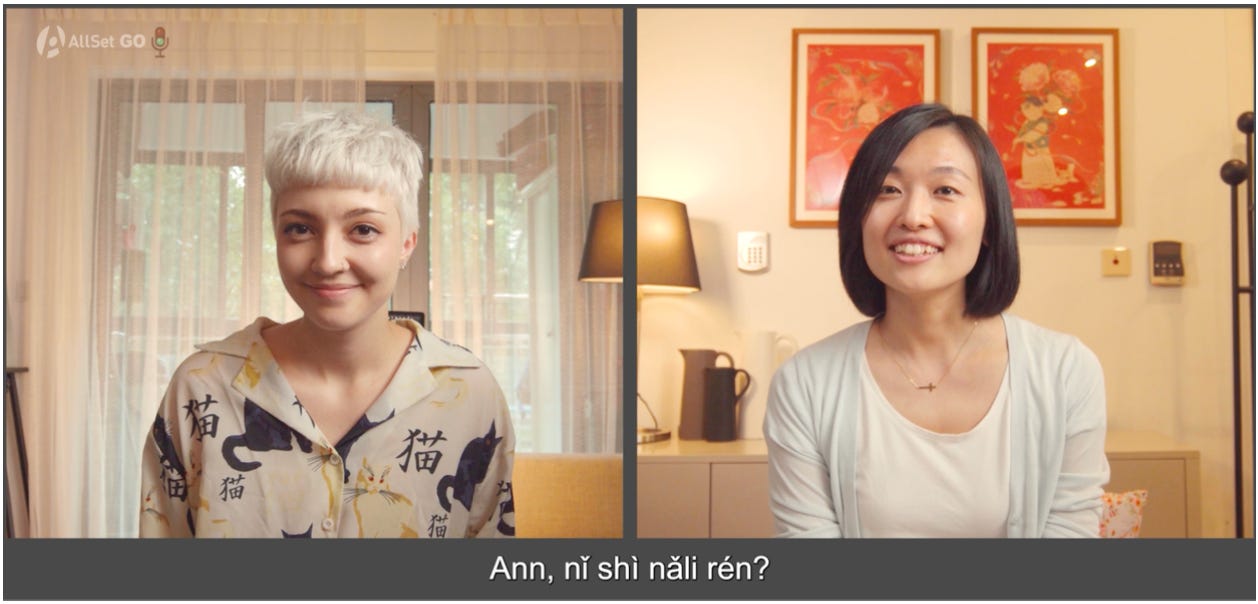
This is pinyin only first… no English! Try to follow along with just the audio and pinyin first. The English translation is further below.
A: Nǐhǎo! Wǒ jiào Ann.
A: Nǐ jiào shénme míngzi?
B: Nǐhǎo, Ann. Wǒ jiào Lìlì.
A: Nǐ shì Zhōngguó rén, duì ma?
B: Duì, wǒ shì Zhōngguó rén.
B: Ann, nǐ shì nǎli rén?
A: Wǒ shì Měiguó rén.
OK, now for the English translation.
A: Nǐhǎo! Wǒ jiào Ann. Hello! My name is Ann.
A: Nǐ jiào shénme míngzi? What’s your name?
B: Nǐhǎo, Ann. Wǒ jiào Lìlì. Hello, Ann. I’m Lili.
A: Nǐ shì Zhōngguó rén, duì ma? You’re Chinese, right?
B: Duì, wǒ shì Zhōngguó rén. Yes, I’m Chinese.
B: Ann, nǐ shì nǎli rén? Ann, where are you from?
A: Wǒ shì Měiguó rén. I’m American.
Not all of the dialogues we’ll share in this newsletter have full video version, but this one totally does! And it’s on YouTube for free.
Vocab Bites [cíhuì]
nǐhǎo - hello, hi [literally, “you good”]
wǒ - I, me
jiào - to call, to be called
nǐ - you
shénme - what
míngzi - name
shì - is, are
Zhōngguó - China
rén - person
Zhōngguó rén - Chinese person
duì - correct
ma - [question particle for yes/no questions]
nǎlǐ - where
Měiguó - the United States [literally, “beautiful country”]
Měiguó rén - American person
Grammar Grains [yǔfǎ]
Here we’ll provide a grammar point or two, but rather getting to into the weeds here, we’ll provide links to AllSet Learning’s very own Chinese Grammar Wiki.
Using the verb “jiao”

Connecting nouns with “shi”

Is this enough grammar, or do you want more, right in the newsletter? Let us know in the comments!
Culture Crumbs [wénhuà]
Surnames are a big deal in Chinese culture. In fact, they’re so important that they come first! (Family name, then given name)
So you might be wondering: in this week’s dialogue, didn’t the Chinese teacher use her given name (Lìlì) instead of her surname? Yes, she did! But why?
While it’s true that surnames are a big deal (and we’ll be talking more about that in future newsletters), it’s also true that Chinese people are extremely accommodating when it comes to names. Many Chinese people are quick to adopt an English name for the convenience of non-Chinese who struggle with the pronunciation of their names.
In this particular case, the Chinese teacher in our dialogue probably just felt that her given name was easier for students to pronounce, plus using her given name helps establish a friendly atmosphere. So the situation is a little more nuanced than “this is how it’s always done.”
We’ll be covering more aspects of Chinese culture (and eventually more on names) in future newsletters, so stay tuned!
More from AllSet Learning
Today's dialogue comes from Lesson 1 of AllSet GO, our 10-lesson beginner Chinese video course. Each lesson builds on the last, with video, audio, pinyin, and grammar explanations. Want to keep going?

Thank you, John!