
ABC #2: Jobs (from AllSet GO)
Wǒ bù shì lǎoshī. Nǐ shì xuésheng.


Audio Note from John
Welcome back! In this audio note I talk about what “roles” are the most useful to know as a beginner if we relentlessly focus on the practical. Get to it!
Pronunciation Power-up [fāyīn]
Direct from the AllSet GO lesson, we’ll answer three more basic questions about the pronunciation in this dialogue.
Question 1: is the pinyin “x” like an English ‘sh’ sound? It may sound that way to you, but the pinyin “x” is a sound that doesn’t exist in English. Pinyin “sh” is much closer to English ‘sh.’ If you’re ready to try to make this unfamiliar sound, you can check out this page.
Question 2: is the pinyin “e” like an English ‘uh’ sound? It can be! In the syllables “de” and “hen” it’s very much like an English ‘uh’ sound. But in other syllables like “xue” and “xie” it’s more like an ‘eh’ sound. Pay close attention to the pronunciation of each word you learn and you will start to spot the patterns.
Question 3: How do I pronounce pinyin “wo”? Good question! This one is a little tricky. It’s definitely not the English word ‘whoa.’ It’s more like ‘woo’ combined with ‘uh’ but not exactly. You need to hear it more and practice it more to get the hang of it.
Jiāyóu! (Literally, “add oil” (to the fire of your passion), this is the most common way to encourage someone to “keep at it” in Mandarin Chinese.)
[More detail on these sounds on the Chinese Pronunciation Wiki.]
Dialogue Drop [duìhuà]
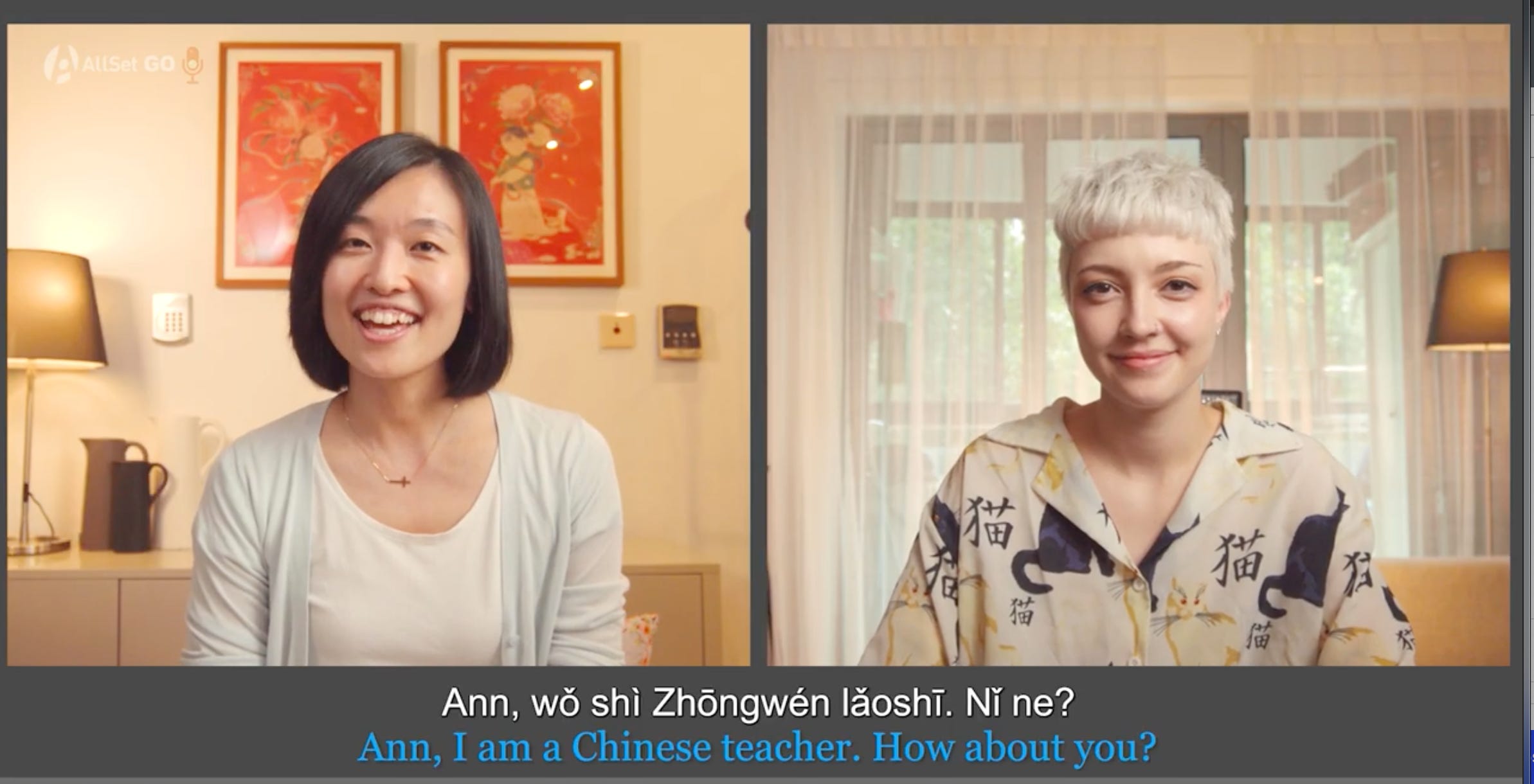
This is pinyin only first… no English! Try to follow along with just the audio and pinyin first. The English translation is further below.
A: Ann, wǒ shì Zhōngwén lǎoshī. Nǐ ne?
B: Wǒ bù shì lǎoshī. Wǒ shì xuésheng.
A: Nǐ de Zhōngwén hěn hǎo.
B: Xièxie!
A: Bù kèqi.
OK, now for the English translation.
A: Ann, wǒ shì Zhōngwén lǎoshī. Nǐ ne? Ann, I am a Chinese teacher. How about you?
B: Wǒ bù shì lǎoshī. Wǒ shì xuésheng. I’m not a teacher. I’m a student.
A: Nǐ de Zhōngwén hěn hǎo. Your Chinese is very good.
B: Xièxie! Thank you!
A: Bù kèqi. You’re welcome.
Not all of the dialogues we’ll share in this newsletter have full video version, but this one totally does! And it’s on YouTube for free.
Vocab Bites [cíhuì]
wǒ - I, me
shì - is, are
Zhōngwén - Chinese (language)
lǎoshī - teacher
ne - [question particle]
nǐ ne - What about you?
bù - not
bùshì - is not, are not
xuéshēng - student
nǐ - you
de - [particle for marking possession]
nǐde - your
hěn - very
hǎo - good
hěn hǎo - very good
xièxie - thank you, thanks
bù kèqi - you’re welcome (lit. “don’t be so polite”)
Grammar Grains [yǔfǎ]
Here we’ll provide a grammar point or two, but rather getting to into the weeds here, we’ll provide links to AllSet Learning’s very own Chinese Grammar Wiki.
Standard negation with "bu"
The vast majority of verbs in Chinese simply use “bù“ to negate them. Super useful pattern!

Simple "noun + adjective" sentences
Although “hěn“ means “very”, sometimes it’s kinda just… going through the motions? Learn this pattern! More explanation at the linked Grammar Wiki page.

Expressing possession with "de"
You can think of “de” as kind of like “‘s” (the one we use in English for possession). But it’s way more versatile than “‘s” in English.

Is this enough grammar, or do you want more, right in the newsletter? Let us know in the comments!
Culture Crumbs [wénhuà]
Is it “nosey” to ask about someone’s job?
In some cultures, asking “What do you do for a living?” right after meeting someone can feel a bit too direct or even intrusive. In China, however, it’s one of the most common and essential icebreakers. Expect it!
Why the focus on work? For many Chinese people, your profession is a key part of your identity and helps others understand your background and social context. It’s not about judging your salary; it’s about finding common ground. Are you in tech? Education? Finance? Knowing this helps the conversation flow and allows people to offer help or find connections.
So, if a new Chinese acquaintance asks about your job within five minutes of meeting, don’t worry! They aren’t being nosy (well, maybe a little?); they’re probably just genuinely interested in getting to know the “professional you” as a way to build a deeper friendship.
Try to make a habit of asking new people you meet about their jobs! If you’re not equipped to do it yet, don’t worry… that’s coming.
More from AllSet Learning
Today’s dialogue comes from Lesson 2 of AllSet GO, our 10-lesson beginner Chinese video course. Each lesson builds on the last, with video, audio, pinyin, and grammar explanations. Want to keep going?

http://www.allsetlearning.com/allset-go-course
The AllSet Learning Family of Newsletters
All the Basics in Chinese (ABC) is not our first newsletter! We now have three:
All the Basics in Chinese (ABC) ← This one!
Make sure you’re listening to the one most appropriate to your level, and don’t forget to recommend them to your Chinese-loving friends and your Chinese teachers! Share the love… We appreciate it.