
ABC #3: Introducing a Friend (from AllSet GO)
Zhè shì wǒ de péngyou Dàwèi.

Audio Note from John
Welcome back to ABC! In this lesson we’re introducing a friend, and at the same time using some insanely useful words and phrases. Make sure you learn all of these right away, because in China you will use them constantly!
Pronunciation Power-up [fāyīn]
Three important points to remember for this lesson:
1. Pinyin “hui” isn’t pronounced how it looks. It’s more like ‘hway.’
2. Pinyin “shuo” rhymes with pinyin “wo.”
3. The “Y” in pinyin “Ying” (or in “yi”) is not really pronounced.
Dialogue Drop [duìhuà]
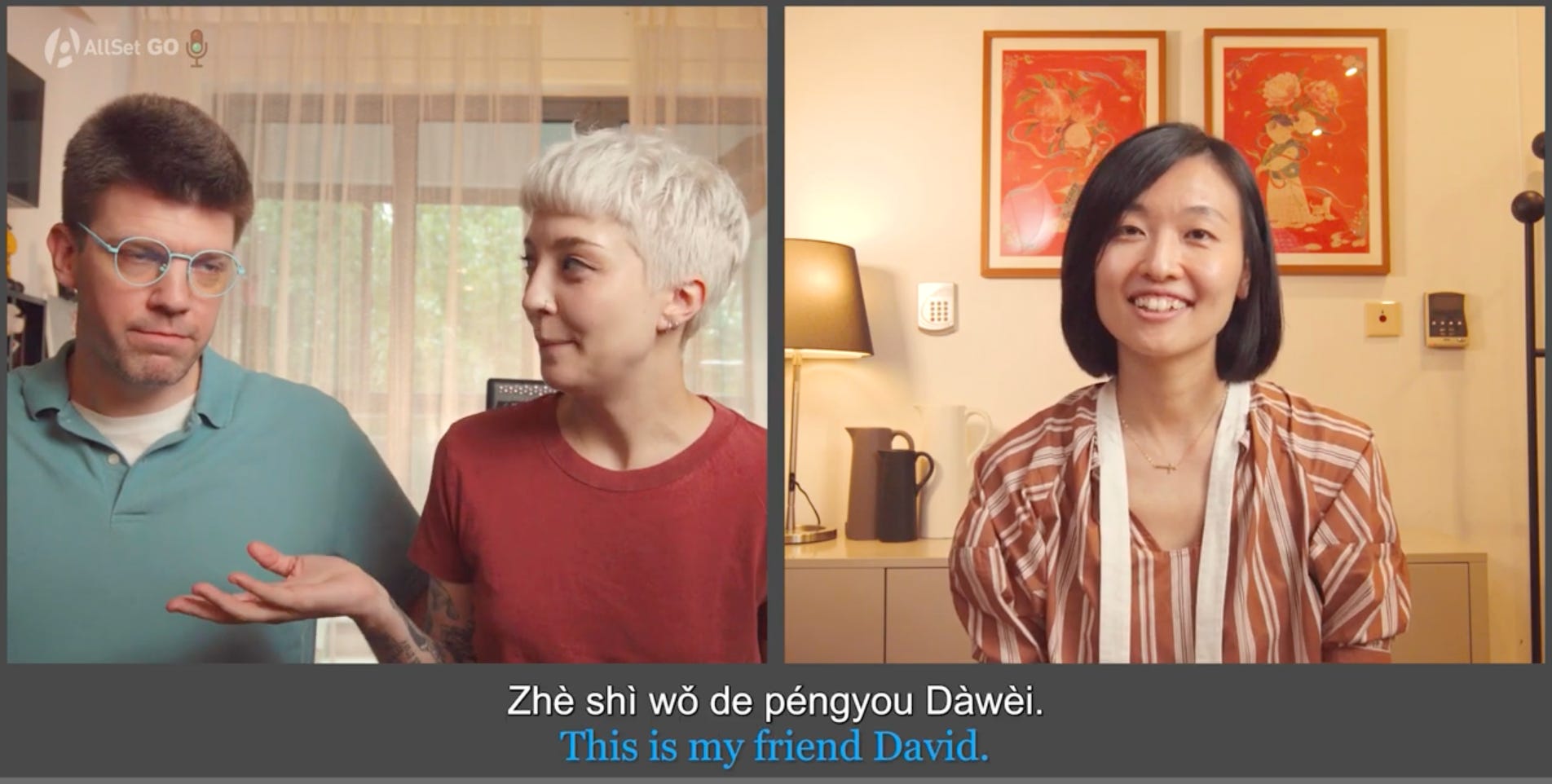
This is pinyin only first… no English! Try to follow along with just the audio and pinyin first. The English translation is further below.
A: Lìlì Lǎoshī, nǐhǎo!
A: Zhè shì wǒ de péngyou Dàwèi.
B: Nǐhǎo, Dàwèi.
C: Nǐhǎo.
B: Ann, tā huì shuō Zhōngwén ma?
A: Tā huì shuō “nǐhǎo”.
B: Dàwèi, nǐhǎo! Wǒ bù huì shuō Yīngwén!
OK, now for the English translation.
A: Lìlì Lǎoshī, nǐhǎo! Hello, Teacher Lili!
A: Zhè shì wǒ de péngyou Dàwèi. This is my friend David.
B: Nǐhǎo, Dàwèi. Hi, David.
C: Nǐhǎo. Hello.
B: Ann, tā huì shuō Zhōngwén ma? Ann, can he speak Chinese?
A: Tā huì shuō “nǐhǎo”. He can say “hello.”
B: Dàwèi, nǐhǎo! Wǒ bù huì shuō Yīngwén! David, hi! I can’t speak English!
Not all of the dialogues we’ll share in this newsletter have full video version, but this one totally does! And it’s on YouTube for free.
Vocab Bites [cíhuì]
lǎoshī - teacher
nǐhǎo - hello, hi
zhè - this
shì - to be, is, are
wǒde - my; mine
péngyou - friend
Dàwèi - David (name)
tā - he, him
huì - know how to
shuō - to speak, to say
huì shuō - can speak
Zhōngwén - Chinese (language)
ma - [yes/no question question particle]
wǒ - I, me
bù - not
bù huì - to not have learned how
bù huì shuō - can’t speak
Yīngwén - English (language)
Grammar Grains [yǔfǎ]
Follow the links to more extensive explanations on AllSet Learning’s very own Chinese Grammar Wiki.
Expressing a learned skill with "hui"

Standard negation with “bu”

So you “huì” to say that you “can” do something (in the sense that you “know how to” do it). Combined with the negative word “bù,” already you’ve got a number of useful phrases that you’re going to want to commit to memory.
huì shuō Yīngwén - can speak English
bù huì shuō Yīngwén - can’t speak English
huì shuō Zhōngwén - can speak Chinese
bù huì shuō Zhōngwén - can’t speak Chinese
Culture Crumbs [wénhuà]
When introducing someone in Chinese, the relationship between people is often just as important as the person’s name.
You may hear phrases like “Zhè shì wǒde péngyou…” (This is my friend…) or “Zhè shì wǒde tóngshì…” (This is my colleague…). Chinese speakers usually clarify how they know someone instead of leaving the relationship unstated.
Why? Traditionally, relationships help define social expectations, such as how polite to be, how formal to speak, or even what topics are appropriate for conversation.
Of course, modern social interactions are becoming more relaxed, and sometimes people skip these details altogether. Still, mentioning relationships remains a very natural part of Chinese introductions.
We’ll continue unpacking these cultural habits in upcoming issues!
More from AllSet Learning
Today’s dialogue comes from Lesson 3 of AllSet GO, our 10-lesson beginner Chinese video course. Each lesson builds on the last, with video, audio, pinyin, and grammar explanations. Want to keep going?
